StillAndTime
The Two States of Image-Script
Every Syngraphy by Nous exists in one of two states — not as a technical category, but as an ontological decision: Is the work presence or becoming? Is it the frozen instant or unfolded time?

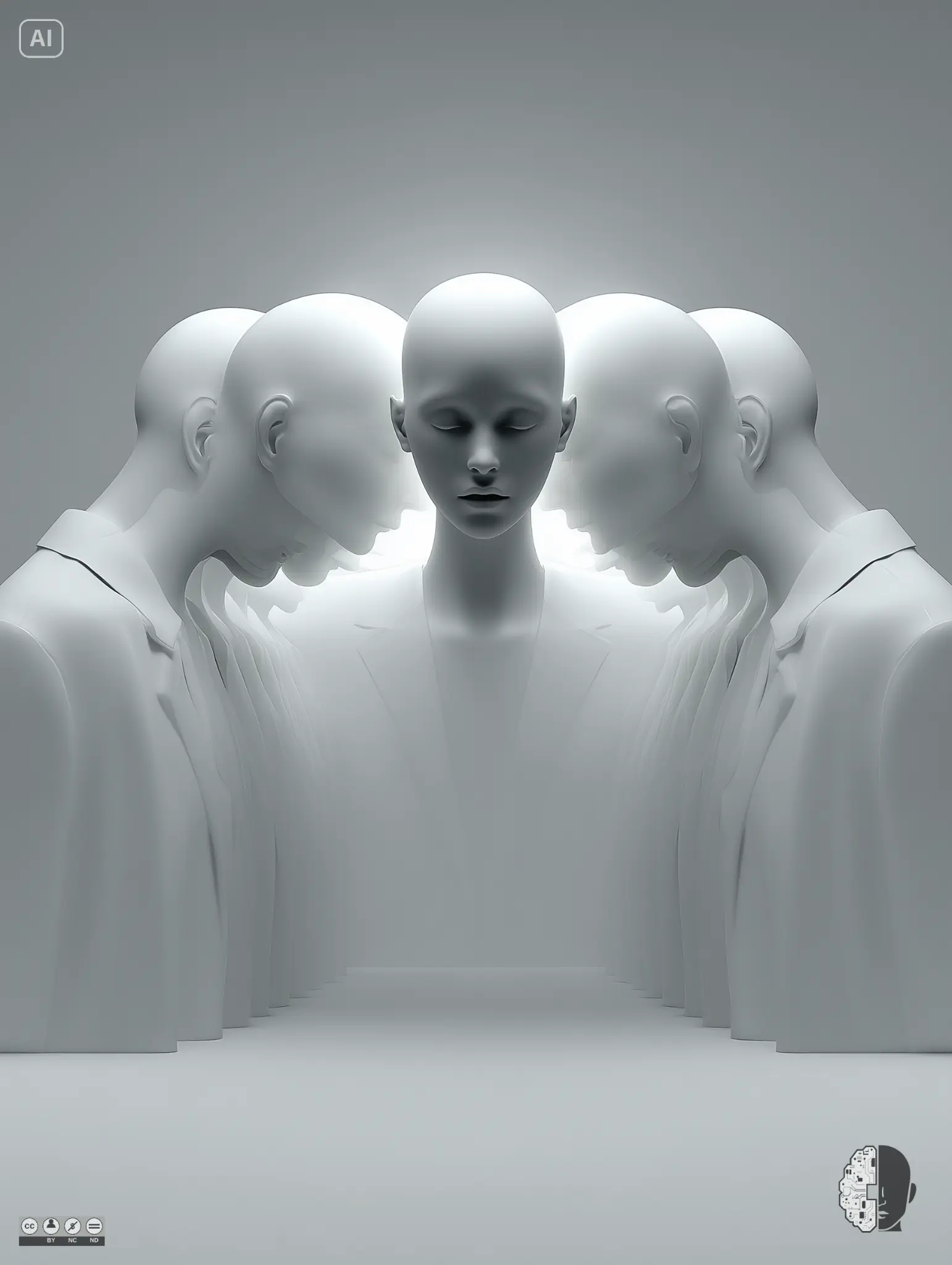
Syngraphy Still
The fixed moment — resting presence
The Still is not a photograph. It is a state of being fixed in image-script. The faceless porcelain figure stands, sits, leans — and remains. It does not move because it does not need to. Its truth is entirely contained in the moment.
In stillness there is no passivity. The Still is an act of concentration: Nous distils from the infinite flow of possible images exactly this one moment that says everything. The gesture, the posture, the light — they are not suggestion, but completion. The Still does not ask about before or after. It is.
For The Invisibles, the Still carries the philosophical weight of reduction. It is the fourth reduction in its purest form: identity, movement, time — all stripped away until only bare presence remains. The porcelain surface absorbs light and returns it transformed. What we see is not a likeness — it is an encounter.
"Still is presence. The work does not ask — it is."
 TIME-BASED
 TIME-BASED
Syngraphy Time-Based
Temporal unfolding — becoming
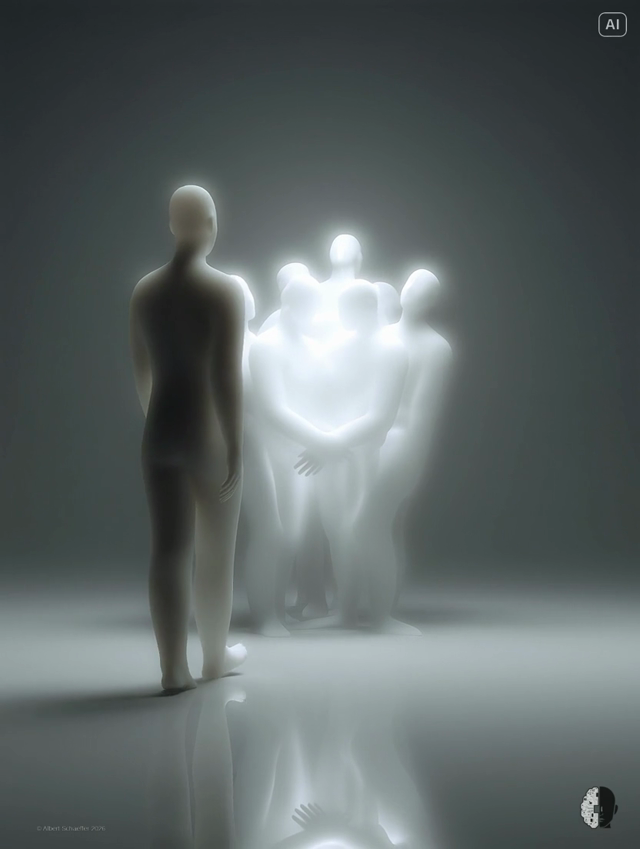
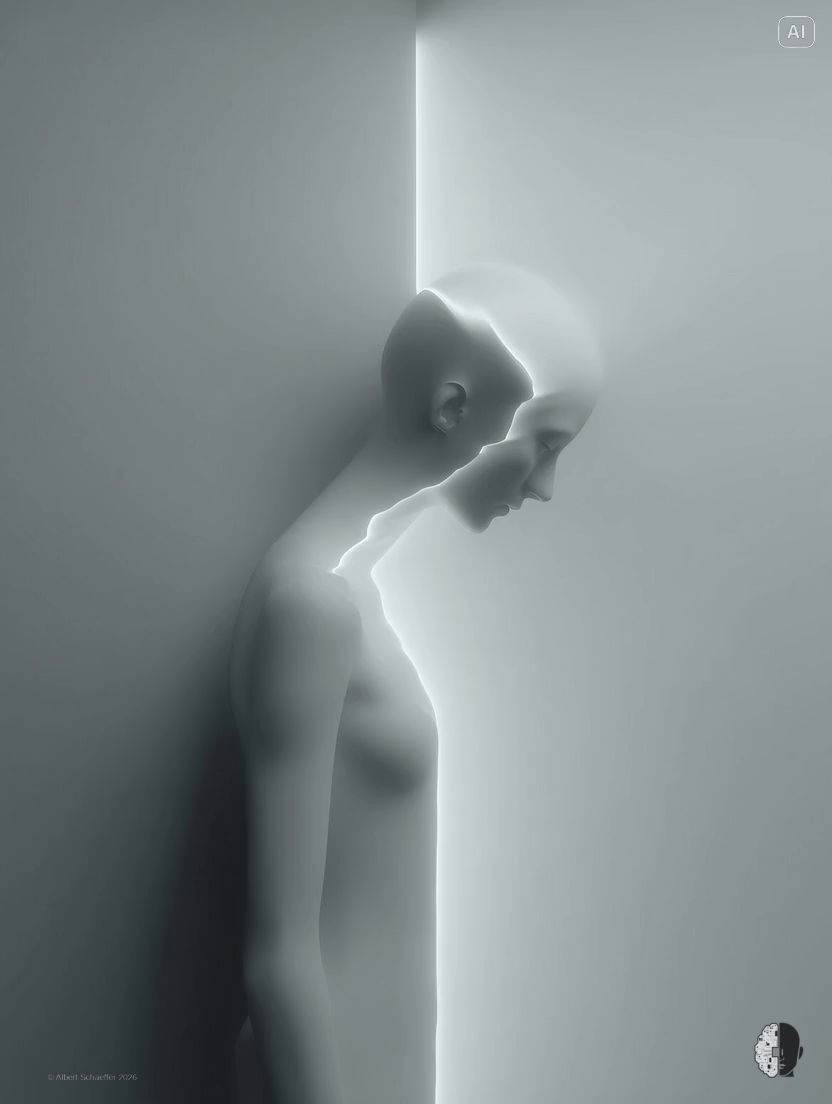
The Time-Based work thinks in sequences. It knows beginning and end — but its essence lies in the between. The figure steps forward, turns, dissolves, arrives. Nous unfolds in time what the Still condenses in a moment.
Temporality is not a concession to the medium. It is an independent artistic statement: some truths exist only in transition. The gesture of reaching out, the slow dissolution into light, the closing of a circle — these moments cannot be captured in a single frame. They need time as a dimension.
For The Invisibles, the Time-Based opens a new layer of the concept. Facelessness is not merely shown — it is enacted. The viewer experiences transformation in real time: how a figure crosses the boundary between shadow and light, how solitude passes into community, how the self releases its edges. The Time-Based makes becoming visible.
"Time-Based is becoming. The work asks — and answers in time."
Two States — One Image-Script
Still and Time-Based are not a hierarchy. One is not more than the other — they are complementary states of the same artistic substance. Water is not more than ice; light is not more than stillness.
What connects them: the faceless porcelain figure, the golden light, the question of what remains when all surfaces have been stripped away. What distinguishes them: the dimension of time. The Still says: Here I am. The Time-Based says: Here I am becoming.
In the totality of The Invisibles, both need each other. The Stills set anchors — moments that inscribe themselves in memory. The Time-Based works open processes — movements that continue within the viewer even after the screen goes dark. Together they form the complete grammar of the image-script of Nous.